
Affinity Purification-Mass Spectrometry (AP-MS)
Affinity Purification-Mass Spectrometry (AP-MS) is a powerful technique used to identify protein-protein interactions (PPIs) and drug-target binding partners by combining affinity-based enrichment with high-resolution mass spectrometry. The method involves the use of a bait molecule—such as a drug, small-molecule probe, or antibody—that is immobilized on a solid support (e.g., beads) to selectively capture interacting proteins from a complex biological sample (e.g., cell lysate or tissue extract). After stringent washing to remove nonspecific binders, the captured proteins are eluted, digested into peptides, and analyzed by liquid chromatography-tandem mass spectrometry (LC-MS/MS). The resulting data are processed using bioinformatics tools to identify high-confidence interactors, enabling the discovery of novel drug targets and signaling networks. AP-MS is particularly valuable for studying weak or transient interactions that are difficult to detect with traditional methods like yeast two-hybrid or co-immunoprecipitation.
AP-MS in Drug Target Discovery
AP-MS has been widely applied in drug target identification, particularly in cases where the mechanism of action (MoA) of a compound is unknown. A notable example is the discovery of the molecular targets of thalidomide, a drug originally used as a sedative but later found to cause severe birth defects. Using AP-MS, researchers identified cereblon (CRBN) as the primary target of thalidomide and its derivatives (immunomodulatory drugs, IMiDs), revealing that drug binding induces the recruitment of neo-substrates for ubiquitination and degradation (Ito et al., 2010, Science, 327(5971), 1345-1350). Another example is the identification of kinase targets of the anticancer drug dasatinib. AP-MS profiling in cancer cell lines revealed that dasatinib not only inhibits BCR-ABL (its intended target) but also binds to multiple other kinases, explaining its broad-spectrum activity (Rix et al., 2007, Blood, 110(12), 4055-4063). These studies demonstrate how AP-MS can uncover both on-target and off-target effects, guiding drug optimization and repurposing efforts.
Standard AP-MS Workflow
The AP-MS workflow for drug target discovery typically involves the following steps:
(1) Bait Preparation—Immobilizing the drug or probe on affinity beads or conjugating it to a tag (e.g., biotin);
(2) Sample Incubation—Exposing the bait to cell lysates or tissue extracts under physiological conditions;
(3) Affinity Purification—Capturing interacting proteins while removing nonspecific binders through stringent washes;
(4) Protein Digestion—Enzymatically cleaving purified proteins into peptides for MS analysis;
(5) LC-MS/MS Analysis—Separating and sequencing peptides to identify proteins;
(6) Bioinformatics Analysis—Using statistical tools (e.g., SAINT, CRAPome) to filter high-confidence interactors.
Controls such as empty beads or inactive analogs are essential to distinguish specific interactions from background noise.
PharmaAnalytica's Technology Platform
EXPEC 5210 LC-MS/MS
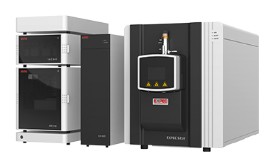
EXPEC 5210 LC-MS/MS enables precise Affinity Purification-MS (AP-MS) analysis with high-sensitivity detection and robust quantification, ideal for identifying protein-protein interactions (PPIs) and complexes.
EXPEC 5700 LC-MS/MS
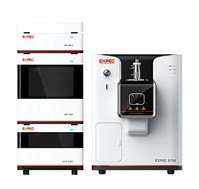
EXPEC 5700 LC-MS/MS delivers ultra-sensitive detection of trace proteins in AP-MS, enabling reliable identification of weak or transient protein interactions.
PharmaAnalytica's AP-MS-Based Drug Target Discovery Services
PharmaAnalytica offers highly sensitive and customized AP-MS services to accelerate drug target discovery. Our platform combines advanced chemical proteomics, high-resolution mass spectrometry, and AI-driven bioinformatics to ensure accurate and reproducible results. Key advantages include:

Comprehensive Coverage
We detect low-abundance targets and transient interactions using optimized enrichment protocols.

Customized Solutions
Tailored experimental designs for diverse applications, including oncology, neurodegeneration, and infectious diseases.
Integrated Validation
Downstream validation (e.g., cellular thermal shift assay [CETSA], siRNA knockdown) to confirm target relevance.
Fast Turnaround
Streamlined workflows from sample preparation to data analysis, reducing time-to-discovery.
By leveraging AP-MS technology, PharmaAnalytica empowers researchers to uncover novel drug targets with high confidence, supporting drug development from early discovery to preclinical validation.
References
- Cravatt, B. F. , et al. (2008). "Activity-based protein profiling: from enzyme chemistry to proteomic chemistry." Annual Review of Biochemistry. 77 (1): 383-414.
- Joyce, J. A. , et al. (2004). "Cathepsin cysteine proteases are effectors of invasive growth and angiogenesis during multistage tumorigenesis." Cancer Cell. 5 (5): 443-453..
- Shan, W. , et al. (2018). "Advanced activity-based protein profiling application strategies for drug development." Frontiers in Pharmacology. 9, 353.
Online Inquiry
This site is protected by reCAPTCHA and the Google Privacy Policy and Terms of Service apply.
Need More Information or Request A Quotation?
Related Links
