
Brunauer-Emmett-Teller (BET)
The Brunauer-Emmett-Teller (BET) theory is a fundamental method for determining the specific surface area, pore size distribution, and porosity of solid materials. Based on gas adsorption (typically nitrogen at 77 K), BET analysis measures the amount of gas molecules adsorbed onto a material's surface at varying pressures. By applying the BET equation, the technique calculates the monolayer adsorption capacity, which correlates with the material's total accessible surface area. Additionally, Barrett-Joyner-Halenda (BJH) analysis extends BET data to evaluate pore volume and size distribution, critical for understanding drug particle behavior in dissolution, stability, and bioavailability.
Applications in Pharmaceutical Partical Analysis
BET analysis is indispensable in drug formulation and quality control, particularly for nanoparticle-based drugs, inhalable powders, and solid dispersions. Key applications include:
- Surface Area Optimization: Higher surface area enhances dissolution rates, crucial for poorly water-soluble drugs (BCS Class II/IV).
- Pore Structure Characterization: Porous carriers (e.g., mesoporous silica) require precise pore size control to regulate drug loading and release kinetics.
- Excipient Selection: BET data guide the choice of adsorbents (e.g., magnesium stearate) to prevent particle aggregation.
- Stability Assessment: Changes in surface area after storage indicate amorphous-crystalline transitions or moisture-induced degradation.
By integrating BET with complementary techniques (e.g., SEM, DSC), STEMart ensures comprehensive particle profiling for robust drug performance.
PharmaAnalytica's BET services leverage high-precision gas sorption analyzers with 0.01 m²/g detection sensitivity, enabling accurate measurements even for low-surface-area materials (e.g., dense API crystals). Our systems support multipoint BET analysis for rigorous linearity validation, avoiding common pitfalls like microporosity overestimation. Advanced quasi-equilibrium adsorption protocols minimize measurement artifacts, while non-linear density functional theory (NLDFT) models provide detailed pore size distributions (1–300 nm). For hygroscopic or temperature-sensitive drugs, we employ controlled-environment sample cells to prevent degradation during degassing. Combined with automated data processing, our BET workflows deliver FDA/ICH-compliant reports with full traceability, essential for regulatory submissions.
PharmaAnalytica's Technology Platform
Kubo-X2000
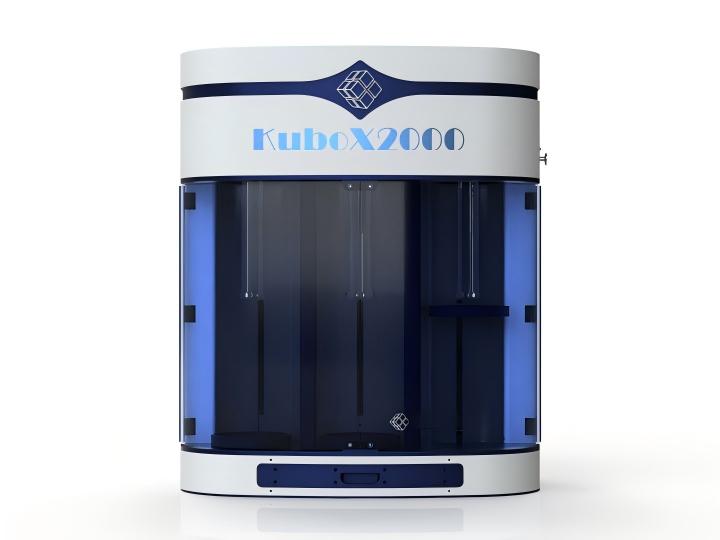
Kubo-X2000 is a fully automated physisorption analyzer specifically designed for micropore analysis, delivering exceptional measurement accuracy for micropores (0.7-2 nm), ultramicropores (0.35-0.7 nm), and samples with ultra-low specific surface areas (<1 m²/g).
Climber
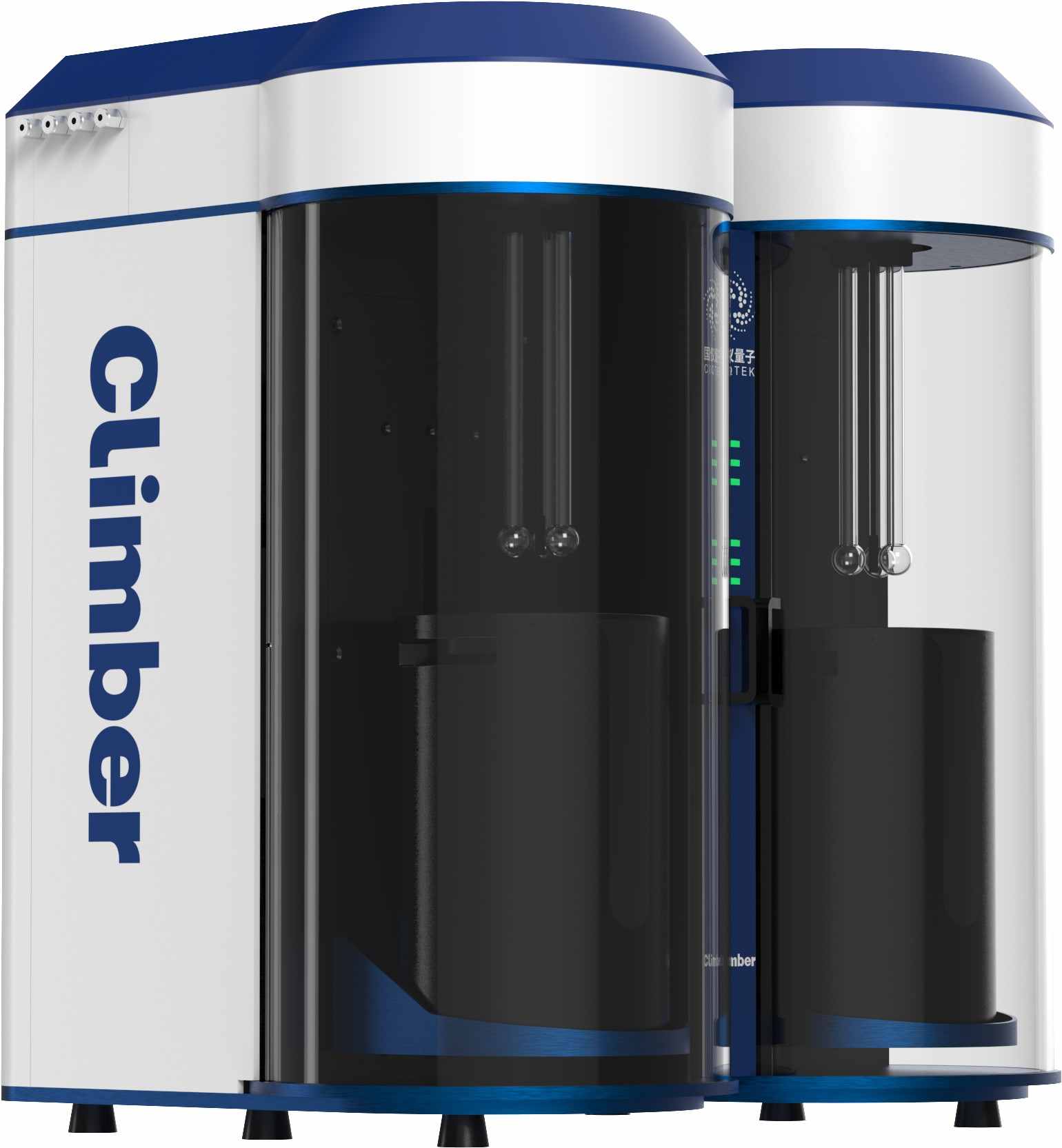
Climber features an ingenious high-throughput gas path design combined with an intelligent and precise gas control program, enabling simultaneous analysis of up to 6 samples. A five-point BET test can be completed within 20 minutes.
PharmaAnalytica’s BET-Based Particle Analysis
PharmaAnalytica’s BET analysis services empower pharmaceutical developers with quantitative, reliable surface and porosity data, driving optimized drug formulations from preclinical R&D to commercial scale.

Pharmaceutical-Focused Expertise
Our team includes PhD-level scientists specializing in BET analysis for drug formulations. We tailor protocols to address challenges like nanoparticle agglomeration or amorphous content interference, ensuring data relevance to bioavailability and stability.

Multi-Technique Correlative Analysis
Beyond standalone BET, we integrate data with SEM-EDS, XRPD, and DLS to correlate surface properties with particle morphology, crystallinity, and size distribution—a holistic approach critical for QbD (Quality by Design) strategies.
Regulatory-Compliant Workflows
All BET analyses adhere to USP <846> and ICH Q6A guidelines, with full method validation (LOQ, repeatability) and 21 CFR Part 11-compliant data systems for audit readiness.
Custom Solutions
Customizable parameters (e.g., degassing conditions, probe gases) accommodate atypical samples like lyophilized biologics or lipid nanoparticles.
By combining cutting-edge instrumentation, regulatory expertise, and cross-disciplinary insights, we deliver actionable solutions to accelerate your drug development pipeline.
Online Inquiry
This site is protected by reCAPTCHA and the Google Privacy Policy and Terms of Service apply.
Need More Information or Request A Quotation?
Related Links
