
Static Light Scattering (SLS)
Static Light Scattering (SLS) is an advanced analytical technique used to determine the molecular weight (MW), size (radius of gyration, Rg), and interaction parameters of particles in solution. Unlike dynamic light scattering (DLS), which measures particle motion (Brownian diffusion), SLS analyzes the absolute intensity of scattered light at different angles to calculate these parameters. The fundamental principle relies on the Rayleigh-Gans-Debye approximation or Mie theory, depending on particle size relative to the laser wavelength. When a laser beam passes through a sample, particles scatter light, and the angular dependence of this scattering provides structural information. By measuring the scattering intensity at multiple angles, SLS can determine the molecular weight (via Debye plot) and size (via Guinier plot), making it particularly useful for macromolecules, proteins, polymers, and nanoparticles in pharmaceutical research.
Applications in Pharmaceutical Partical Analysis
Static Light Scattering plays a crucial role in biopharmaceutical and nanomedicine development by providing critical quality attributes (CQAs) of drug formulations. In monoclonal antibodies (mAbs), mRNA-LNPs, and polymer-based drug delivery systems, SLS helps characterize:
- Molecular Weight (MW): Ensures batch-to-batch consistency in biologics.
- Aggregation State: Detects early-stage protein aggregation that could impact stability.
- Conformation Changes: Monitors structural integrity under stress conditions (e.g., pH, temperature).
- Nanoparticle Size (Rg): Validates the size distribution of liposomes, micelles, and other nanocarriers.
Additionally, SLS is used in formulation screening to optimize excipient compatibility and in stability studies to assess long-term storage effects. Regulatory agencies (FDA, EMA) often require SLS data for biosimilarity assessments and nanomedicine approvals, making it indispensable in modern drug development.
Static Light Scattering offers several unique advantages over other particle characterization techniques. Unlike DLS, which only provides hydrodynamic size (Rh), SLS directly measures absolute molecular weight without requiring calibration standards, making it highly accurate for large biomolecules and complex formulations. It is also less affected by polydispersity or small impurities, allowing for reliable analysis of heterogeneous samples. SLS can detect weak interactions (e.g., protein-protein or protein-excipient binding) through second virial coefficient (A₂) measurements, which are critical for predicting colloidal stability. Furthermore, multi-angle detection enables structural insights (e.g., branching in polymers or shape changes in proteins), while low sample consumption (µg quantities) makes it ideal for high-value biologics. When combined with SEC-MALS (Size-Exclusion Chromatography with Multi-Angle Light Scattering), SLS provides separation-based size and MW distributions, resolving complex mixtures that other techniques cannot.
PharmaAnalytica's Technology Platform
Topsizer Laser Particle Size Analyzer
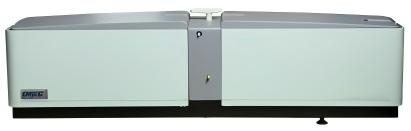
Topsizer Laser Particle Size Analyzer offers numerous advantages, including a wide measurement range, excellent repeatability, high accuracy, reliable test results, and a high level of automation. It is capable of measuring samples dispersed in liquids as well as powder materials dispersed in gases.
JL-6000 Laser Particle Size Analyzer
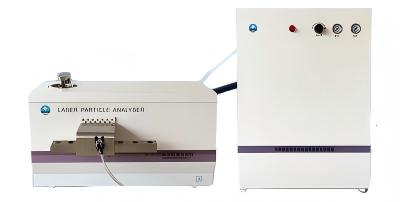
JL-6000 Laser Particle Size Analyzer integrates both dry and wet testing methods, capable of outputting cumulative particle size distribution data and curves, interval particle size distribution data and histograms, typical particle size values, volume mean diameter, area mean diameter, specific surface area, and other key data.
PharmaAnalytica's SLS-Based Particle Analysis
PharmaAnalytica's Static Light Scattering (SLS) services provide accurate, regulatory-ready particle characterization for biologics, nanomedicines, and complex drug formulations.

Cutting-Edge Instrumentation
PharmaAnalytica employs high-precision multi-angle SLS detectors coupled with HPLC/SEC systems for separation-enhanced analysis. Our instruments cover a broad MW range (1 kDa–10 MDa) and size range (1 nm–1 µm), ensuring accurate data for diverse drug formulations.

Regulatory-Compliant Testing
We adhere to ICH, USP, and FDA guidelines for method validation, ensuring that our SLS data meets GMP/GLP standards. Our reports include detailed uncertainty analysis and are accepted by global regulatory agencies for IND/NDA submissions.
Customized Study Design
PharmaAnalytica offers tailored SLS protocols for specific challenges, such as: aggregation propensity studies under stress conditions (thermal, pH, shear), real-time stability monitoring of lyophilized or liquid formulations.
Expert Support
With a team of PhD-level scientists, we deliver expert consultation on data interpretation and formulation optimization.
By leveraging advanced instrumentation, regulatory expertise, and customized solutions, we help pharmaceutical companies accelerate development, reduce risks, and ensure product quality.
Online Inquiry
This site is protected by reCAPTCHA and the Google Privacy Policy and Terms of Service apply.
Need More Information or Request A Quotation?
Related Links
