
Fourier Transform Infrared Spectroscopy (FTIR)
Fourier Transform Infrared Spectroscopy (FTIR) is a powerful analytical technique that measures the absorption of infrared light by molecular bonds in a sample, generating a unique spectral fingerprint. When infrared radiation passes through a drug-excipient mixture, specific functional groups (e.g., -OH, C=O, N-H) absorb energy at characteristic frequencies, producing peaks in the spectrum. In drug-excipient compatibility studies, FTIR data interpretation focuses on peak shifts, broadening, disappearance, or the appearance of new peaks, which indicate molecular interactions. Key indicators of incompatibility include:
- Hydrogen Bonding Interactions: Shifts in O-H or N-H stretching peaks suggest API-excipient complexation (e.g., between a drug's carboxyl group and a polymer's hydroxyl group).
- Esterification or Salt Formation: New peaks in the 1700–1600 cm⁻¹ range (C=O stretching) or 1550–1400 cm⁻¹ range (COO⁻ stretching) may indicate chemical reactions.
- Crystallinity Changes: Alterations in sharp crystalline peaks (vs. broad amorphous bands) reveal physical interactions.
By comparing spectra of pure components with their mixtures, FTIR provides direct evidence of molecular-level interactions that could affect drug stability, solubility, or bioavailability.
Applications in Drug-Excipient Compatibility Studies
FTIR is indispensable for early-stage formulation development due to its ability to detect both physical and chemical interactions between APIs and excipients. Its primary applications include:
- Excipient Screening: Rapidly identifying incompatible excipients (e.g., magnesium stearate-induced API degradation) by comparing spectral changes.
- Polymorph Stability Assessment: Detecting shifts in crystalline peaks that may indicate API-excipient-induced polymorphic transitions.
- Degradation Product Identification: Monitoring new peaks that suggest hydrolysis, oxidation, or Maillard reactions (e.g., sugar-based excipients with amine drugs).
- Co-processed Excipient Analysis: Verifying the absence of unwanted interactions in co-processed excipients (e.g., silicified microcrystalline cellulose).
FTIR offers unmatched specificity in identifying functional groups and molecular interactions, making it ideal for non-destructive, label-free analysis. FTIR directly probes chemical bonds, providing unambiguous evidence of hydrogen bonding, proton transfer, or covalent adduct formation. The technique requires minimal sample preparation (solid, liquid, or gas phases) and can analyze microgram quantities with high sensitivity. Modern FTIR systems equipped with attenuated total reflectance (ATR) enable direct analysis of powders or gels without KBr pellet preparation. Coupled with chemometrics, FTIR data can quantify interaction intensities and predict compatibility risks statistically. Additionally, FTIR is fast (seconds to minutes per scan) and cost-effective, aligning with Good Manufacturing Practice (GMP) requirements for routine quality control. Its ability to complement other techniques (e.g., Raman spectroscopy or XRD) further enhances formulation development efficiency.
PharmaAnalytica's Technology Platform
FTIR-850
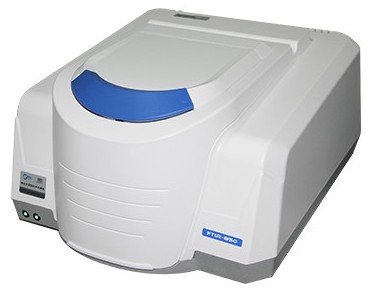
FTIR-850 Fourier Transform Infrared Spectrometer equipped with an ATR (Attenuated Total Reflectance) accessory enables rapid, non-destructive analysis of API-excipient interactions by detecting molecular-level bond vibrations, facilitating early-stage compatibility screening in pharmaceutical formulation development.
FTIR920S
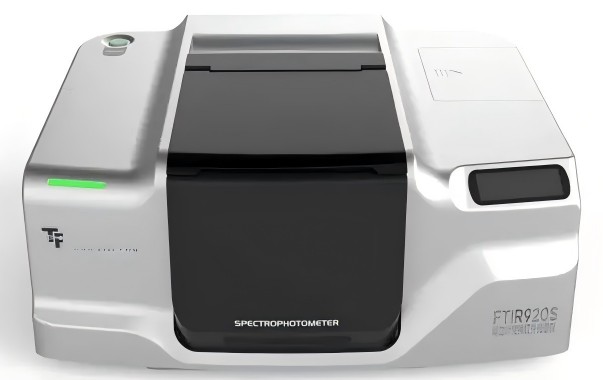
FTIR920S Fourier Transform Infrared Spectrometer delivers exceptional spectral resolution and sensitivity, enabling precise detection and analysis of API-excipient interactions through highly accurate infrared spectral characterization of molecular vibrations and chemical bonding.
PharmaAnalytica's FTIR-Based Drug-Excipient Compatibility Studies
PharmaAnalytica's FTIR services transform drug-excipient compatibility testing into a rapid, precise, and actionable process.

High-Resolution FTIR
PharmaAnalytica utilizes state-of-the-art FTIR spectrometers, enabling direct analysis without destructive sampling, and enhanced sensitivity for trace interactions in low-dose formulations.

On-Demand Training and Knowledge Transfer
We provide client workshops on interpreting FTIR spectra for formulation scientists and the best practices for sample preparation to minimize artifacts.
GMP/GLP-Compliant Documentation
PharmaAnalytica ensures audit-ready reports with 21 CFR Part 11-compliant electronic records for data integrity, and detailed deviation analysis to support quality-by-design (QbD) approaches.
End-to-End Expert Support
PharmaAnalytica's pharmaceutical scientists provide custom experimental design for complex formulations, troubleshooting for overlapping peaks and recommendations for alternative excipients.
By combining cutting-edge instrumentation, advanced data analytics, and regulatory expertise, we help clients mitigate formulation risks, accelerate development timelines, and ensure compliance with global standards.
Online Inquiry
This site is protected by reCAPTCHA and the Google Privacy Policy and Terms of Service apply.
Need More Information or Request A Quotation?
Related Links
