
Thermogravimetric Analysis (TGA)
Thermogravimetric Analysis (TGA) is a thermal analysis technique that measures changes in a sample's mass as a function of temperature or time under controlled atmospheric conditions. By subjecting a drug-excipient mixture to a programmed heating regime, TGA detects thermal decomposition, volatilization, desorption, oxidation, and other mass-related transitions. In drug-excipient compatibility studies, TGA data interpretation focuses on deviations in weight loss profiles between pure components and their mixtures. Key indicators of incompatibility include:
- Shift in Decomposition Temperature: A lower onset of degradation in the mixture suggests chemical interactions (e.g., acid-base reactions or catalytic decomposition).
- Altered Weight Loss Steps: New or missing mass loss events may indicate formation of intermediates or degradation products.
- Residue Content Discrepancies: Significant differences in residual mass after heating imply altered stability.
By comparing these thermal profiles, TGA provides early-stage screening for potential incompatibilities that could compromise drug stability or performance.
Applications in Drug-Excipient Compatibility Studies
TGA is a critical tool for predicting stability risks in pharmaceutical formulations. Its primary applications include:
- Excipient Screening: Rapidly assessing interactions between APIs and excipients (e.g., binders, disintegrants) under thermal stress.
- Degradation Pathway Analysis: Identifying temperature-sensitive reactions (e.g., dehydration, oxidation) that may occur during storage or processing.
- Moisture Content Determination: Quantifying bound or free water in hygroscopic excipients (e.g., lactose, starch), which can affect drug stability.
- Oxidative Stability Testing: Evaluating oxidative induction time (OIT) for antioxidants or oxygen-sensitive formulations.
TGA offers unparalleled sensitivity in detecting mass changes as small as 0.1 μg, making it ideal for studying trace-level interactions in drug-excipient systems. TGA directly quantifies mass loss or gain, providing unambiguous evidence of chemical reactions (e.g., decarboxylation or oxidation). The technique requires minimal sample preparation (typically 5–20 mg) and can analyze solids, liquids, or gels under varied atmospheres (e.g., N₂, O₂, or air). Coupled with evolved gas analysis (EGA), TGA can identify volatile byproducts (e.g., CO₂ or HCl) via FTIR or MS, clarifying degradation mechanisms. Moreover, TGA data is highly reproducible and aligns with GMP/GLP requirements, ensuring regulatory compliance. Its ability to simulate real-world conditions (e.g., high humidity or oxidative stress) further enhances predictive accuracy for formulation stability.
PharmaAnalytica's Technology Platform
DZ-TGA201 TGA
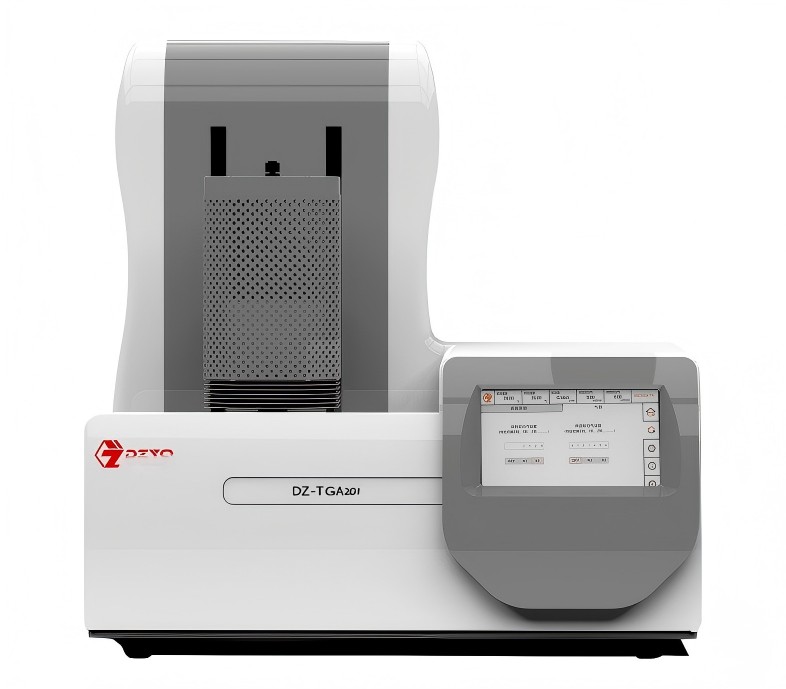
DZ-TGA201 is a high-precision automatic thermogravimetric analyzer (TGA) with microgram-level sensitivity, capable of detecting minute mass changes. It features PID intelligent temperature control and measures the mass change of a sample as a function of temperature or time, revealing key material properties such as thermal stability, decomposition behavior, compositional analysis, and reaction kinetics.
DZ-TGA105 TGA
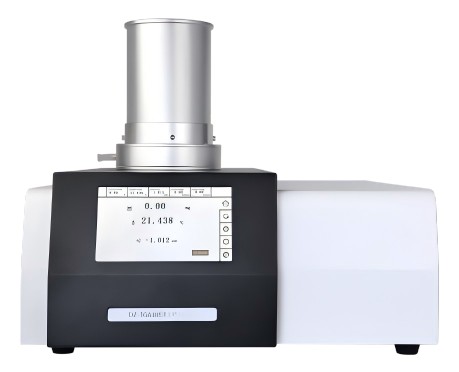
DZ-TGA105 is a high-temperature thermogravimetric analyzer (TGA) featuring intelligent temperature programming, rapid heating rates, excellent thermal stability, and a bidirectional smart control system, ensuring user-friendly operation. It is primarily used to measure material thermal stability, decomposition processes, adsorption/desorption behaviors, oxidation/reduction reactions, quantitative compositional analysis, and the effects of additives/fillers.
PharmaAnalytica's TGA-Based Drug-Excipient Compatibility Studies
PharmaAnalytica's TGA services transform drug-excipient compatibility testing into a rapid, data-driven process.

High-Throughput Screening
PharmaAnalytica employs automated TGA systems capable of analyzing up to 16 samples per run, significantly accelerating excipient compatibility screening.

Advanced Coupled Techniques
We integrate TGA with FTIR or mass spectrometry to characterize evolved gases, enabling identification of degradation products, mechanistic insights into excipient-induced API instability.
Regulatory-Ready Data Packages
Our reports comply with ICH Q1A, Q6A, and USP <891>, including compatibility risk ratings (low/medium/high) based on mass loss kinetics, correlative data from DSC or XRD for comprehensive material characterization.
End-to-End Expert Support
PharmaAnalytica's team of pharmaceutical scientists provides custom experimental design for complex formulations, troubleshooting assistance for ambiguous results and formulation optimization recommendations to mitigate incompatibilities.
By combining cutting-edge instrumentation, regulatory expertise, and tailored support, we help clients identify stability risks early, reduce formulation failures, and accelerate robust drug product development.
Online Inquiry
This site is protected by reCAPTCHA and the Google Privacy Policy and Terms of Service apply.
Need More Information or Request A Quotation?
Related Links
