
Organic Impurity Analysis with UPLC
Ultra-Performance Liquid Chromatography (UPLC) is an advanced chromatographic technique that enhances the speed, resolution, and sensitivity of traditional HPLC. UPLC operates on the same fundamental principles as HPLC—separating compounds based on their interaction with a stationary phase and a mobile phase—but utilizes smaller particle sizes (<2 µm) and higher pressures (up to 15,000 psi). This results in faster separations, sharper peaks, and improved detection limits, making it ideal for trace-level organic impurity analysis. UPLC is typically coupled with UV/Vis, PDA, or mass spectrometry (MS) detectors, enabling precise identification and quantification of impurities in complex pharmaceutical matrices.
Applications in Impurity Test
UPLC offers several key advantages that make it the preferred choice for pharmaceutical impurity analysis. First, its superior resolution allows for the separation of structurally similar compounds (e.g., isomers or co-eluting impurities) that may be unresolved by HPLC. Second, UPLC provides faster run times (typically 3-5x faster than HPLC), significantly improving laboratory throughput. The enhanced sensitivity (detection at ppm to ppb levels) is critical for identifying trace impurities that could impact drug safety or efficacy. Additionally, UPLC's reduced solvent consumption lowers operational costs and aligns with green chemistry principles. The technique is also highly compatible with mass spectrometry (UPLC-MS), enabling structural elucidation of unknown impurities. These attributes make UPLC indispensable for pharmaceutical quality control, stability testing, and regulatory compliance (e.g., ICH Q3A/B, USP <621>).
UPLC is widely applied in pharmaceutical analysis for detecting organic impurities in various sample types, including:
- Active Pharmaceutical Ingredients (APIs): Monitoring process-related impurities (e.g., intermediates, byproducts) and degradants (e.g., oxidation, hydrolysis products).
- Drug Formulations (Tablets, Capsules, Injectables): Assessing degradation products and excipient-related impurities.
- Biologics & Biosimilars: Detecting protein aggregates, host cell proteins, and post-translational modifications.
- Herbal & Natural Products: Identifying pesticides, mycotoxins, and adulterants.
- Stability Studies: Tracking impurity profiles under forced degradation conditions (e.g., heat, light, humidity).
UPLC is particularly valuable for samples requiring high resolution, speed, and sensitivity, such as low-dose formulations or complex biologics.
PharmaAnalytica's Technology Platform
EClassical 3200L
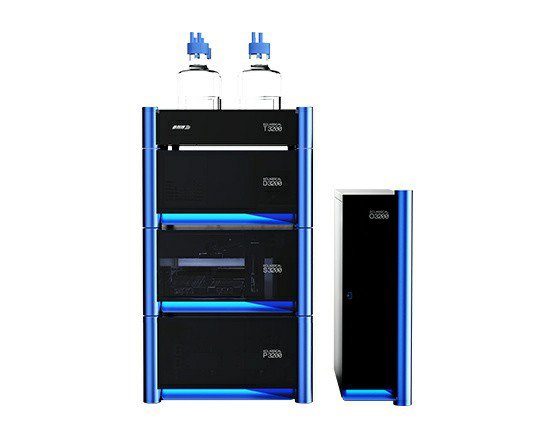
EClassical 3200L UHPLC is equipped with sample tray cooling functionality and ultra-fast injection technology, ensuring a faster and more stable sample analysis process. It features automatic wavelength calibration and dual-wavelength simultaneous detection, delivering higher precision results.
LC5190
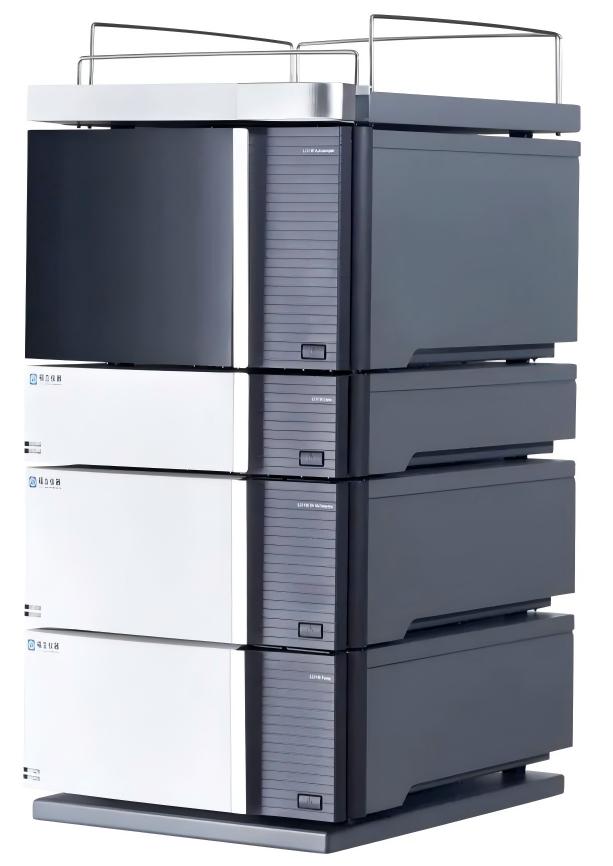
LC5190 realizes the concept of low-pressure ultra-high-performance liquid chromatography (UHPLC), achieving high separation efficiency, high sensitivity, and high-throughput analysis under conventional HPLC pressure levels. Equipped with a high-performance UV detector covering a wavelength range of 190-900 nm, it also supports multiple detection modes including ELSD, PDA, FLD, and RID detectors.
PharmaAnalytica's UPLC-Based Impurity Test Service
PharmaAnalytica's UPLC-based organic impurity detection service combines cutting-edge technology, regulatory expertise, and customized solutions to ensure pharmaceutical product safety.

Regulatory Compliance & Method Validation
PharmaAnalytica's UPLC testing adheres to ICH Q3A/B, USP <621>, and EP 2.2.29 guidelines. We provide fully validated methods (specificity, accuracy, precision, LOD/LOQ) to ensure data reliability for regulatory submissions.

Customized Method Development
Our experts develop tailored UPLC methods for complex matrices (e.g., peptides, oligonucleotides) and forced degradation studies to predict impurity pathways.
Fast Turnaround & Comprehensive Reporting
With automated workflows and 24/7 instrument operation, we deliver rapid results. Clients receive detailed reports with chromatograms, mass spectra, and impurity trend analysis.
Root-Cause Analysis
Our advanced root-cause analysis goes beyond standard impurity identification, employing multi-disciplinary investigative approaches to definitively classify impurities as process-related, degradation products and excipient-driven interactions.
By leveraging UPLC's speed, sensitivity, and resolution, we empower clients to meet global quality standards efficiently. Partner with STEMart for accurate, compliant, and high-throughput impurity analysis.
Online Inquiry
This site is protected by reCAPTCHA and the Google Privacy Policy and Terms of Service apply.
Need More Information or Request A Quotation?
Related Links
