
Laser Diffraction (LD)
Laser Diffraction (LD) is a widely used analytical technique for determining the particle size distribution (PSD) of powders, suspensions, and emulsions. The method is based on the principle that particles scatter laser light at different angles depending on their size. When a laser beam passes through a dispersed sample, larger particles scatter light at smaller angles, while smaller particles scatter light at larger angles. A detector array measures the intensity of scattered light across multiple angles, and advanced algorithms (such as Mie theory or Fraunhofer approximation) convert this data into a volumetric particle size distribution. LD provides a rapid, non-destructive, and highly reproducible measurement of particle sizes ranging from 0.01 µm to 3,000 µm, making it suitable for a broad spectrum of pharmaceutical applications.
Applications in Pharmaceutical Partical Analysis
Particle size is a critical parameter in pharmaceutical formulations, influencing drug dissolution, bioavailability, stability, and manufacturability. Laser Diffraction plays a pivotal role in multiple stages of drug development:
- API (Active Pharmaceutical Ingredient) Characterization: Ensuring consistent particle size of raw materials to optimize solubility and batch-to-batch uniformity.
- Formulation Optimization: Analyzing suspensions, liposomes, and nano/microemulsions to enhance drug delivery (e.g., controlled-release formulations).
- Process Control: Monitoring milling, spray drying, or granulation processes to achieve target particle distributions.
- Quality Assurance: Detecting agglomeration or sedimentation in injectables, inhalables, and oral solid dosages to meet regulatory standards (e.g., USP <429>).
By providing precise and rapid PSD data, LD helps pharmaceutical scientists accelerate formulation development, reduce production failures, and ensure compliance with industry guidelines.
Laser Diffraction offers several key advantages over traditional particle sizing techniques like sieving or dynamic light scattering (DLS). First, it provides a wide dynamic range (0.01–3,000 µm), allowing analysis of both nano- and macro-particles in a single measurement. Second, LD is highly reproducible and operator-independent, as it relies on first-principles physics rather than empirical calibration. Third, the technique is fast (typically <1 minute per run) and requires minimal sample preparation—dry powders can be measured directly, while liquids only need brief dispersion. Additionally, LD is non-destructive, enabling repeated analysis of rare or expensive materials. Unlike microscopy, it delivers statistically robust volumetric distributions rather than 2D projections. These attributes make LD the gold standard for industrial particle sizing in pharmaceuticals.
PharmaAnalytica's Technology Platform
Bettersize 2600 Laser Particle Size Analyzer
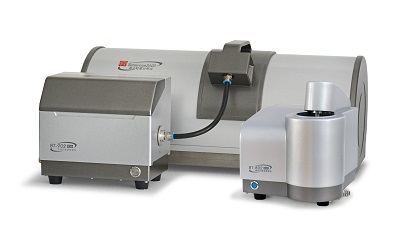
Bettersize 2600 Laser Particle Size Analyzer is an intelligent laser diffraction instrument featuring a combined forward/backward Fourier optical system. Utilizing a single laser beam, it achieves full-angle detection of scattered light signals (forward, side, and backward scattering), enabling precise particle size analysis across a broad dynamic range—from nanoscale to millimeter-level samples.
BT-9300S Laser Particle Size Analyzer
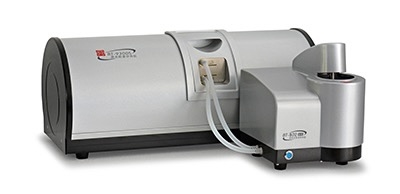
BT-9300S Laser Particle Size Analyzer features a dual-lens optical system with photodetectors positioned at forward, side, and backward angles to ensure precise capture of scattered light signals across the entire measurement range. Its independent automatic circulation dispersion system integrates multiple intelligent functions including automatic testing, auto-centering, auto-filling/draining of water, and bubble elimination, which collectively guarantee optimal sample dispersion and enhance measurement consistency and repeatability.
PharmaAnalytica's LD-Based Particle Analysis
PharmaAnalytica's Laser Diffraction services empower drug developers with rapid, reliable, and regulatory-ready particle size analysis.

High-Resolution & Wide Size Range Coverage
PharmaAnalytica's LD instruments achieve sub-micron resolution (down to 10 nm) and cover the full spectrum of pharmaceutical particle sizes, from nanoparticles to coarse granules, ensuring comprehensive characterization for diverse formulations.

Regulatory-Compliant Methodology
Our LD protocols adhere to USP <429>, ISO 13320, and ICH Q6A guidelines, with full documentation support for regulatory submissions (e.g., FDA, EMA). We provide detailed reports including D10/D50/D90, span values, and distribution curves.
Customized Dispersion & Measurement Solutions
We optimize dispersion parameters (e.g., sonication, pressure, or wet/dry methods) for challenging samples (e.g., cohesive powders, viscous suspensions) to prevent artifacts like agglomeration or over-milling.
Expert Data Interpretation
Our team delivers actionable insights, correlating PSD data with dissolution rates, flowability, and stability trends.
By combining cutting-edge instrumentation with deep pharmaceutical expertise, we help optimize formulations, streamline manufacturing, and ensure product quality from preclinical to commercial stages.
Online Inquiry
This site is protected by reCAPTCHA and the Google Privacy Policy and Terms of Service apply.
Need More Information or Request A Quotation?
Related Links
