
Residual Solvent Analysis with GC
Gas Chromatography (GC) is a powerful analytical technique used to separate, identify, and quantify volatile and semi-volatile compounds. In residual solvent testing, the sample is vaporized and carried through a chromatographic column by an inert gas (e.g., helium or nitrogen). The stationary phase inside the column interacts differently with each solvent, causing them to elute at distinct retention times. A detector (typically Flame Ionization Detection, FID, or Mass Spectrometry, MS) then measures the concentration of each solvent. GC is highly sensitive, capable of detecting trace levels (ppm to ppb) of residual solvents, making it the gold standard for pharmaceutical compliance with ICH Q3C, USP <467>, and EP 2.4.24.
Applications in Impurity Test
Gas Chromatography is the preferred method for residual solvent analysis due to its unparalleled sensitivity, selectivity, and efficiency. Unlike HPLC or UV-based techniques, GC excels in detecting volatile organic compounds (VOCs) with minimal sample preparation. The use of capillary columns provides high-resolution separation, allowing even structurally similar solvents (e.g., methanol vs. ethanol) to be distinguished. When coupled with Headspace-GC (HS-GC), the technique becomes non-destructive and automatable, eliminating matrix interference from non-volatile components. Additionally, GC-MS enhances identification confidence by providing mass spectral confirmation, critical for unknown peak investigation. Regulatory bodies such as the FDA, EMA, and PMDA mandate GC-based methods, ensuring compliance with global pharmacopeial standards. The method's robustness, fast analysis time (typically <20 minutes per run), and ability to quantify solvents down to 0.1 ppm make it indispensable for quality control in drug development and manufacturing.
GC-based residual solvent analysis is suitable for a wide range of pharmaceutical materials, including:
- Active Pharmaceutical Ingredients (APIs) – Detection of Class 1, 2, and 3 solvents from synthesis
- Drug Products (Tablets, Injectables, Topicals) – Ensuring solvent limits in final formulations
- Excipients (Polymers, Binders, Coatings) – Screening for residual processing aids
- Herbal Extracts & Natural Products – Monitoring ethanol, acetone, or hexane residues
- Medical Devices & Packaging Materials – Assessing leachable solvents.
PharmaAnalytica's Technology Platform
SCION 8500 GC
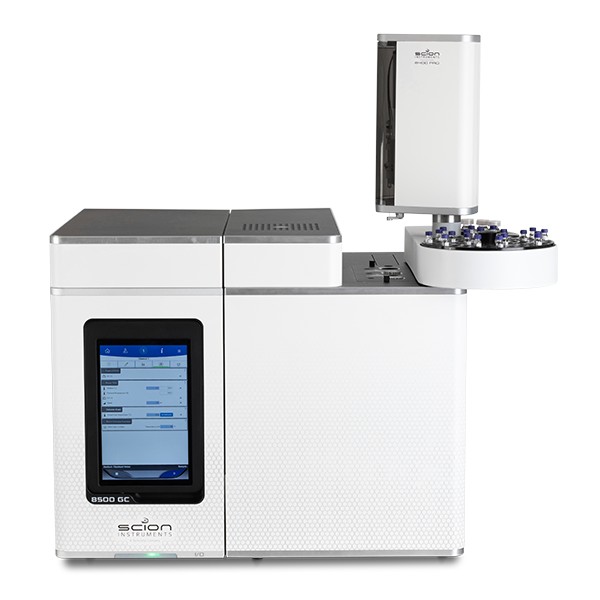
SCION 8500 GC is a high-performance gas chromatograph ideal for pharmaceutical residual solvent analysis. With iEPC precision (±0.001 psi), FID sensitivity (1.5 pg C/s), and compliance with USP <467>/EP 2.4.24, it ensures reliable detection of Class 1-3 solvents (ICH Q3C). Its 21 CFR Part 11-ready software and preloaded pharmacopeial methods streamline GMP testing.
SCION 436i/456i GC
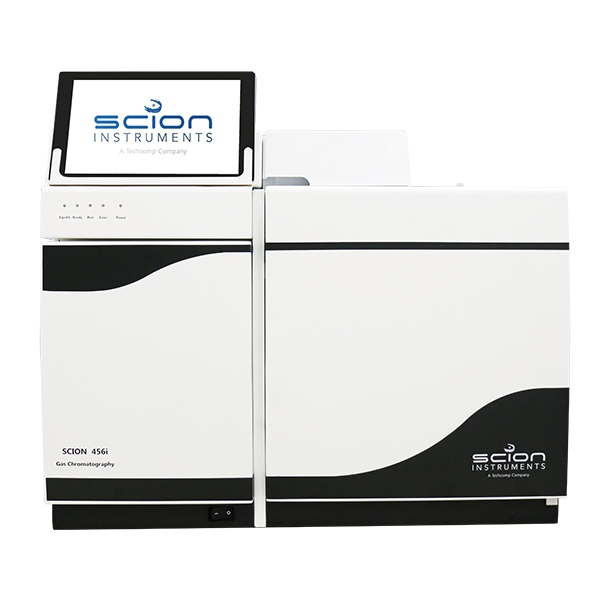
SCION 436i/456i GC delivers high-precision residual solvent analysis for pharmaceuticals. Featuring advanced EPC control, ultra-sensitive FID (≤1 pg C/s), and compliance with USP <467>/EP 2.4.24, it ensures accurate detection of ICH Q3C Class 1-3 solvents. Its intuitive software and GMP-ready design enhance efficiency in QC labs.
PharmaAnalytica's GC-Based Impurity Test Service
PharmaAnalytica's residual solvent analysis service combines cutting-edge GC technologies, regulatory expertise, and customized solutions to deliver reliabel results.

Regulatory-Compliant Method Development & Validation
We design and validate GC methods in full alignment with ICH Q2(R1), USP <467>, and EP 2.4.24, including method suitability for diverse matrices, customized calibration for atypical solvents, and stability-indicating protocols to track solvent levels under accelerated storage conditions.

Multi-Detector Confirmation
To ensure result accuracy, we employ GC-FID for high-sensitivity quantification, GC-MS for structural confirmation of unknown peaks, and Static/Dynamic Headspace-GC to avoid matrix effects in solid dosages.
Comprehensive Data Reporting & Interpretation
We provide detailed analytical reports with chromatograms, retention time matching, and quantitative results, along with expert interpretation to help clients understand compliance status and potential risks, ensuring seamless integration into regulatory documentation.
End-to-End Support
Beyond testing, we assist with impurity risk assessment per ICH Q3C classification, justification reports for solvent limit waivers, and deficiency response packages for FDA/EMA inquiries.
We specialize in analyzing complex matrices including peptides, lipid nanoparticles, and inhalers, offering tailored solutions from method development to regulatory submission support. Our commitment to precision, rapid turnaround times, and comprehensive data interpretation ensures your products meet ICH, USP, and EP standards efficiently.
Online Inquiry
This site is protected by reCAPTCHA and the Google Privacy Policy and Terms of Service apply.
Need More Information or Request A Quotation?
Related Links
