
Powder X-ray Diffraction (PXRD)
Powder X-ray Diffraction (PXRD) is a powerful analytical technique used to determine the crystal structure, polymorphism, and physical state of pharmaceutical materials. The method works by irradiating a powdered sample with monochromatic X-rays, which diffract upon interacting with the crystal lattice planes of the material. The resulting diffraction pattern provides unique peak positions and intensities, serving as a "fingerprint" for the crystalline phase.
In drug-excipient compatibility studies, PXRD is crucial for detecting physical interactions between the active pharmaceutical ingredient (API) and excipients. If incompatibility occurs, changes such as peak shifts, disappearance of characteristic peaks, or the appearance of new peaks may indicate amorphization, polymorphic transitions, or co-crystal formation. Unlike chemical degradation (detected by HPLC or FTIR), PXRD specifically identifies solid-state changes, making it indispensable for preformulation studies.
Applications in Drug-Excipient Compatibility Studies
PXRD plays a critical role in pharmaceutical development by:
- Identifying crystalline stability: Detects whether API remains stable in the presence of excipients or undergoes phase transitions.
- Monitoring polymorphic changes: Different polymorphs exhibit distinct diffraction patterns, allowing early detection of undesirable forms.
- Detecting interactions in solid dispersions: Confirms whether a drug is molecularly dispersed or recrystallized in polymeric matrices.
- Assessing co-processing effects: Evaluates whether mechanical blending (e.g., dry granulation) alters crystallinity.
By comparing PXRD patterns before and after stress testing (elevated temperature/humidity), scientists can predict long-term stability issues and optimize formulations accordingly.
PXRD offers several unmatched advantages for drug-excipient compatibility analysis. Unlike spectroscopic methods, PXRD provides quantitative crystallinity data rather than just functional group interactions. It is non-destructive, allowing samples to be reused for further testing. The technique is highly sensitive to minor phase changes, detecting as little as 1-5% amorphous content in crystalline materials—a critical factor for bioavailability in poorly soluble drugs. Additionally, PXRD requires minimal sample preparation, as it directly analyzes powders without dissolution or pressing. Modern PXRD systems equipped with high-resolution detectors and temperature-controlled stages enable real-time monitoring of phase transitions under simulated storage conditions. Combined with Rietveld refinement, PXRD can quantify polymorphic ratios.
PharmaAnalytica's Technology Platform
DX-2700BH Powder X-ray Diffractometer
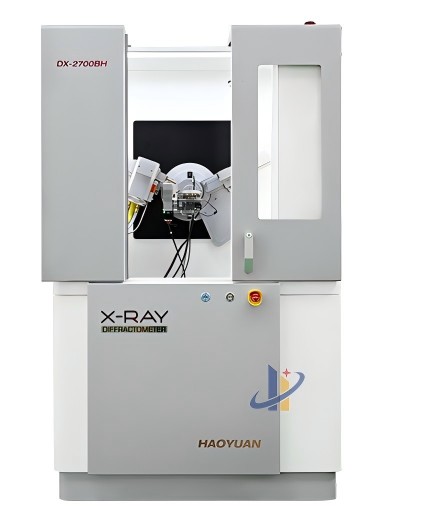
The DX-2700BH Powder X-ray Diffractometer is ideal for drug-excipient compatibility studies. With high-precision goniometry, low background, and excellent long-term stability, it reliably identifies API polymorphs, tracks phase changes, and detects incompatibility-related new phases or amorphization. Its Cu Kα source and qualified software support crystal structure comparison, crystallinity analysis, and regulatory-compliant data output for formulation screening and stability testing.
DX-27mini Benchtop X-ray Diffractometer
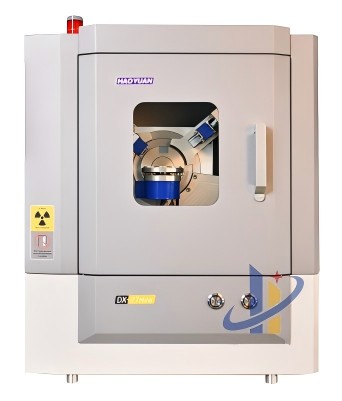
The DX-27mini Benchtop X-ray Diffractometer, equipped with a Cu Kα source and high angular precision, is well-suited for drug-excipient compatibility studies. Its compact design enables fast, stable scanning to identify polymorph changes, new phases, and amorphization. It supports rapid formulation screening, stability evaluation, and reliable data output for pharmaceutical quality control and early-stage development.
PharmaAnalytica's PXRD-Based Drug-Excipient Compatibility Studies
PXRD is a gold-standard technique for detecting solid-state incompatibilities in pharmaceutical formulations. PharmaAnalytica's cutting-edge instrumentation, stress-testing protocols, and multi-technique integration ensure reliable, regulatory-compliant data to mitigate formulation risks.

Customized Experimental Design
We tailor PXRD testing protocols based on specific drug properties (e.g., hygroscopicity, polymorphism tendency) and excipient interactions (e.g., surfactants, polymers).

Accelerated Stress Testing
We conduct temperature- and humidity-controlled PXRD studies to simulate long-term storage and predict stability risks early in formulation development.
Regulatory-Compliant Reporting
All PXRD data is delivered with full method validation (ICH Q2(R1)) and electronic raw data (CDER-compliant 21 CFR Part 11).
Integrated Multi-Technique Approach
For conclusive results, we combine PXRD with DSC, TGA, and FTIR to correlate crystallinity changes with thermal behavior and chemical interactions, offering a holistic compatibility evaluation.
By leveraging our expertise, pharmaceutical companies can optimize drug stability, reduce development delays, and accelerate regulatory submissions.
Online Inquiry
This site is protected by reCAPTCHA and the Google Privacy Policy and Terms of Service apply.
Need More Information or Request A Quotation?
Related Links
