
Dynamic Vapor Sorption (DVS)
Dynamic Vapor Sorption (DVS) is a gravimetric technique that measures the moisture uptake and release of materials under controlled humidity and temperature conditions. The instrument exposes a sample to a precisely regulated vapor environment (typically water vapor) while continuously monitoring its mass change. By analyzing the sorption-desorption isotherms, DVS provides critical insights into the hygroscopicity, stability, and interaction behavior of pharmaceutical materials.
In drug-excipient compatibility studies, DVS data helps determine whether an excipient adversely affects the drug's stability by:
- Identifying moisture-induced phase changes (e.g., amorphous-to-crystalline transitions, deliquescence).
- Detecting interactions (e.g., moisture-mediated drug-excipient reactions, such as hydrolysis or solid-state transformations).
- Assessing physical stability (e.g., excipient-induced moisture uptake that may accelerate drug degradation).
A significant difference in sorption behavior between the pure drug and its mixture with an excipient suggests incompatibility, guiding formulation scientists in selecting optimal excipients.
Applications in Drug-Excipient Compatibility Studies
Drug-excipient compatibility is crucial in ensuring the chemical and physical stability of pharmaceutical formulations. Incompatible excipients can lead to reduced drug potency, altered dissolution profiles, or even toxic degradation products. DVS plays a pivotal role in pre-formulation studies by:
- Predicting long-term stability: Accelerated humidity exposure simulates real-world storage conditions, revealing potential stability risks early.
- Optimizing formulation design: By comparing the moisture sorption profiles of drug-excipient blends, scientists can avoid hygroscopic excipients that may destabilize the API (Active Pharmaceutical Ingredient).
- Supporting regulatory compliance: DVS data provides scientific justification for excipient selection, which is critical for regulatory filings (e.g., FDA, EMA).
Dynamic Vapor Sorption offers several key advantages over traditional compatibility testing methods. Unlike conventional stress testing (e.g., thermal or light exposure), DVS provides a controlled and quantitative assessment of moisture-related instability, making it ideal for hygroscopic or humidity-sensitive drugs. The technique's high sensitivity allows detection of subtle changes in material properties, such as amorphous content or polymorphic transitions, which may impact drug performance. Additionally, DVS requires minimal sample preparation and consumes small quantities of material, making it cost-effective for early-stage development. Its ability to generate precise sorption isotherms enables researchers to model moisture-dependent behavior under different environmental conditions, ensuring robust formulation strategies. These advantages make DVS an indispensable tool for modern pharmaceutical development, particularly for biologics, solid dispersions, and moisture-sensitive compounds.
PharmaAnalytica's Technology Platform
HGA-200 HydroSorp Gravimetric Analyzer
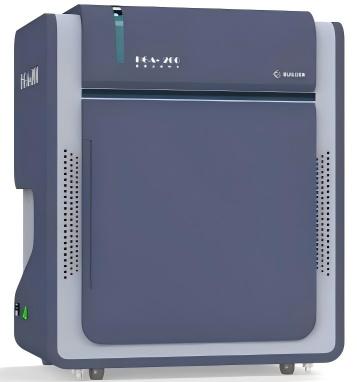
HGA-200 HydroSorp Gravimetric Analyzer is built on DVS technology, integrating an independent microbalance, high-sensitivity sensors, and a high-speed data acquisition system. This system enables precise detection of mass changes as small as 1 μg while dynamically adjusting environmental humidity (water vapor pressure). It not only accurately measures adsorption/desorption isotherms but also provides in-depth analysis of the kinetic properties of material-water interactions by tracking real-time mass responses to humidity variations.
BSD-DVS Multi-station Gravimetry Vapor Sorption Analyzer
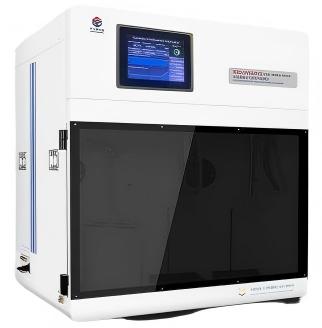
BSD-DVS Multi-station Gravimetric Vapor Sorption Analyzer measures the adsorption/desorption capacity of a sample toward specific vapors or gases by detecting weight changes before and after exposure to controlled relative pressure, using ultra-microbalances. It supports testing of water vapor, organic vapors, and various gases, providing parameters such as adsorption capacity, desorption kinetics, and adsorption rates.
PharmaAnalytica's DVS-Based Drug-Excipient Compatibility Studies

Advanced DVS Instrumentation
STEMart utilizes state-of-the-art DVS instruments with ultra-sensitive microbalances (±1 µg resolution) and precise humidity control (±0.5% RH), ensuring accurate and reproducible data for even low-dose APIs.

Customized Experimental Design
Our team tailors DVS testing protocols to mimic real-world storage conditions (e.g., ICH stability guidelines), including multi-cycle sorption-desorption studies and variable temperature testing.
Regulatory-Compliant Data Reporting
We provide comprehensive reports with detailed sorption isotherms, kinetic analysis, and compatibility assessments, supporting IND/NDA submissions with scientifically defensible data.
Integrated Compatibility Solutions
Beyond DVS, STEMart combines complementary techniques (e.g., DSC, XRD, FTIR) for a holistic understanding of drug-excipient interactions, offering end-to-end formulation support.
By leveraging DVS technology and PharmaAnalytica's expertise, pharmaceutical companies can mitigate formulation risks, accelerate development timelines, and ensure product stability under real-world conditions.
Online Inquiry
This site is protected by reCAPTCHA and the Google Privacy Policy and Terms of Service apply.
Need More Information or Request A Quotation?
Related Links
