
DNA-Encoded Library Screening
DNA-Encoded Library (DEL) screening stands as a revolutionary high-throughput hit discovery technology in modern drug development, addressing the bottlenecks of low efficiency and high cost in traditional small-molecule screening. This cutting-edge approach tags each chemical compound with a unique DNA barcode, enabling the rapid, parallel screening of billions of diverse small-molecule entities against disease-related drug targets in a single reaction system. Unlike conventional high-throughput screening (HTS) that relies on single-compound per-well testing, DEL screening streamlines hit identification by combining library incubation, target binding, non-specific binding removal, and DNA barcode amplification/sequencing, making it a cornerstone for early-stage drug discovery across oncology, immunology, virology, and rare diseases.
PharmaAnalytica, a premium brand under STEMart, delivers customized, full-cycle DEL hit screening services tailored to global pharmaceutical clients, biotech firms, and academic research institutions. Our platform integrates top-tier DEL libraries (covering over 100 billion structurally novel, drug-like small molecules), standardized experimental workflows, and high-performance domestic analytical instruments, enabling efficient, accurate identification of high-quality hit compounds for drug targets. This technology drastically shortens the hit discovery cycle, cuts R&D costs, and boosts the success rate of preclinical drug development, bridging the gap between basic target research and clinical candidate molecule development.
Standard DEL Hit Screening Workflow
Our standardized DEL hit screening service follows a rigorous, four-phase workflow to ensure reliable, actionable screening results:
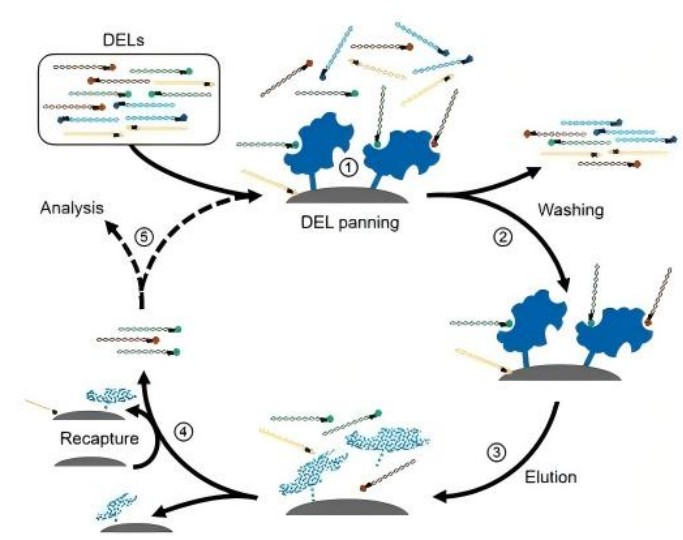 Fig 1. Typical DEL selection cycle1
1. Experimental Design & Target Preparation: Customize screening schemes based on client drug target types (soluble proteins, membrane proteins, etc.) and research goals, select appropriate DEL sub-libraries, and prepare high-purity, active target proteins to ensure the specificity of binding reactions.
2. DEL Library Incubation & Binding: Incubate the DEL library with immobilized or free target proteins under optimized buffer conditions, allowing active compounds to specifically bind to the target, while setting up blank control and non-specific binding control groups to improve screening accuracy.
3. Washing, Elution & Barcode Processing: Remove non-specifically bound compounds through stringent washing steps, elute target-bound hit compounds, extract DNA barcodes, and perform amplification using the qPCR system to enrich effective barcode templates.
4. Sequencing, Hit Identification & Validation: Conduct high-throughput sequencing of amplified barcodes, decode compound information through bioinformatics analysis, screen primary hits, and verify binding activity via orthogonal assays (e.g., SPR, MST) to obtain high-confidence hit compounds.
PharmaAnalytica's Technology Platform
Gentier 96E Real-Time Quantitative PCR System
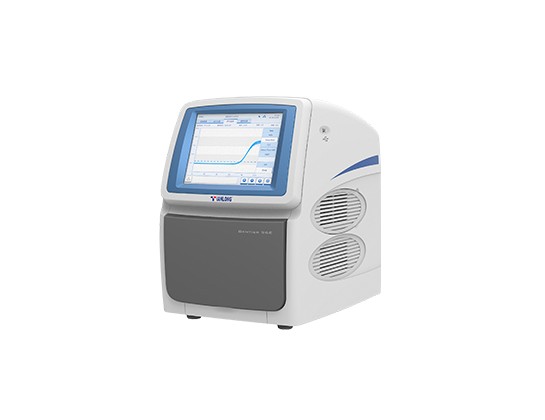
The Gentier 96E qPCR system is vital for DEL screening DNA barcode amplification and quantification. With 6-channel optics and fast, uniform temperature control, it enables high-sensitivity 96-well parallel testing, accurately quantifying low-abundance barcodes, cutting false positives, and ensuring reliable, reproducible screening data for large-scale projects.
DNBSEQ-T1+ High-Throughput Sequencer
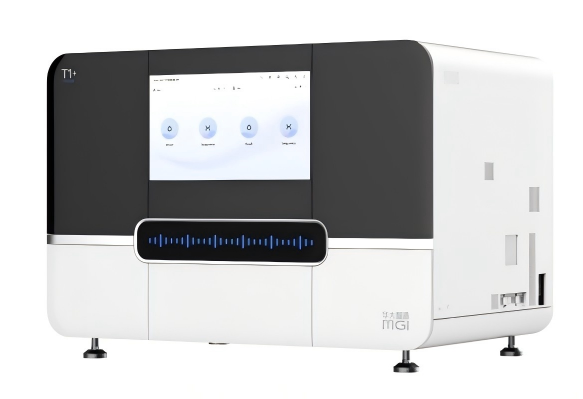
The DNBSEQ-T1+ High-Throughput Sequencer is a robust desktop next-generation sequencing platform tailored for DEL screening barcode decoding. Powered by DNBSEQ technology, it delivers Tb-level data in 24 hours with ultra-low error rates, enabling high-depth, rapid parallel sequencing of amplified DNA barcodes. It efficiently identifies active hit compounds from massive library datasets, supporting fast, reliable hit annotation and accelerating early drug discovery.
Advantages of PharmaAnalytica's DEL Services

Ultra-Large Library Capacity
Access to a billion-level diverse DEL library, covering abundant chemical scaffolds and drug-like molecules, maximizing the chance of identifying active hits for various drug targets.

High Efficiency & Cost Savings
One-pot mixed screening mode slashes screening time and reagent costs, shortening the hit discovery cycle by 60% compared to traditional HTS.
Advanced Instrument Support
Equipped with high-performance qPCR and sequencing platforms, ensuring stable, high-quality data output while reducing service costs for clients.
Full-Process Customization
Offer tailored solutions from library screening to hit validation, supporting post-screening hit optimization and lead molecule development, providing a one-stop drug discovery service.
Backed by STEMart's robust R&D strength and PharmaAnalytica's professional technical team, our DEL hit screening services empower clients to efficiently break through early drug discovery bottlenecks, accelerate the launch of innovative drugs, and gain a competitive edge in the global pharmaceutical market.
Reference
- Ottl, J., et al. (2019). "Encoded library technologies as integrated lead finding platforms for drug discovery". Molecules. 24(8): 1629.
Online Inquiry
This site is protected by reCAPTCHA and the Google Privacy Policy and Terms of Service apply.
Need More Information or Request A Quotation?
Related Links
