
Dynamic Light Scattering (DLS)
Dynamic Light Scattering (DLS), also known as Photon Correlation Spectroscopy (PCS), is a widely used analytical technique for measuring the size distribution and stability of nanoparticles, proteins, and colloidal systems in liquid suspensions. The method is based on the Brownian motion of particles in a solution: when a laser beam passes through the sample, the particles scatter light, and fluctuations in the scattered light intensity occur due to their random movement. A highly sensitive detector captures these fluctuations, and an autocorrelation function analyzes the rate of intensity changes, which is directly related to the diffusion coefficient of the particles. Using the Stokes-Einstein equation, the hydrodynamic diameter (size) of the particles is calculated. DLS is particularly effective for measuring particles in the range of 0.3 nm to 10 µm, making it ideal for nanoparticles, liposomes, proteins, and other biomolecules in pharmaceutical research.
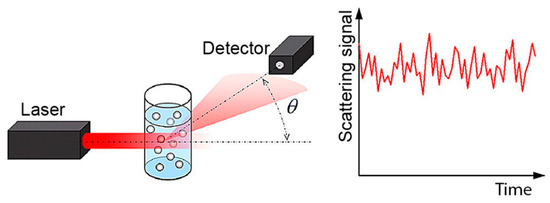 Fig 1. DLS principle of operation 1
Applications in Pharmaceutical Partical Analysis
DLS plays a crucial role in formulation development, quality control, and regulatory compliance in the pharmaceutical industry. Key applications include:
- Nanoparticle Drug Delivery Systems: Measuring the size and stability of liposomes, polymeric nanoparticles, and lipid nanoparticles (LNPs) used in mRNA vaccines and gene therapies.
- Protein Aggregation Analysis: Detecting aggregates, oligomers, and subvisible particles in biopharmaceuticals (e.g., monoclonal antibodies, vaccines) to ensure product safety.
- Exosome & Viral Vector Characterization: Assessing the size distribution of exosomes, AAVs, and lentiviral vectors in cell and gene therapy development.
- Formulation Stability Studies: Monitoring particle growth, aggregation, and degradation under different storage conditions (temperature, pH, ionic strength).
By providing real-time, label-free, and non-destructive measurements, DLS helps optimize drug formulations, reduce batch-to-batch variability, and comply with FDA, EMA, and ICH guidelines (e.g., USP <729> for liposomal products).
DLS offers several key advantages over other particle sizing techniques. First, it requires minimal sample preparation—only a small volume (as low as 2 µL) is needed, and no labeling or dilution is typically required. Second, DLS provides high sensitivity to small particles and aggregates, detecting species as small as 0.3 nm, which is critical for protein therapeutics and nanomedicine. Third, the technique is rapid (measurements typically take <1 minute) and non-invasive, allowing repeated analysis of the same sample. Additionally, DLS can measure zeta potential (surface charge) when combined with electrophoretic light scattering (ELS), offering insights into colloidal stability. Unlike electron microscopy or size-exclusion chromatography, DLS does not require extensive calibration or sample drying, making it a versatile and user-friendly tool for both research and quality control.
PharmaAnalytica's Technology Platform
BeNano 90 Nanoparticle Size Analyzer
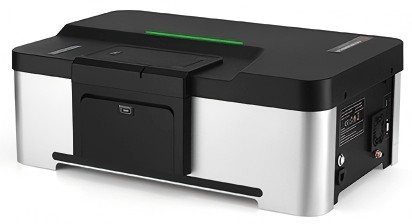
BeNano 90 Nanoparticle Size Analyzer determines particle size distribution based on the Dynamic Light Scattering (DLS) principle. It features ultra-fast measurement capabilities, achieving a maximum detection speed of 0.5 seconds per result. The intelligent software automatically adjusts the light source energy based on real-time signal-to-noise ratio (SNR) optimization, ensuring high-precision data even for challenging samples.
BT-9300S Laser Particle Size Analyzer
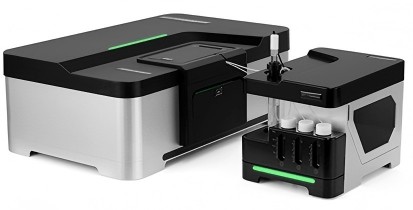
BeNano 180 Nanoparticle Size Analyzer utilizes backscattering detection technology, where the photodetector captures fluctuations in scattered light intensity caused by Brownian motion of particles at a 173° backscattering angle. This design enables reliable measurements across a broad particle size range, making it suitable for diverse sample types.
PharmaAnalytica's DLS-Based Particle Analysis
PharmaAnalytica's Dynamic Light Scattering (DLS) services empower pharmaceutical developers with fast, accurate, and regulatory-ready particle analysis.

High-Resolution & Broad Size Range Coverage
PharmaAnalytica's DLS instruments achieve sub-nanometer resolution (0.3 nm–15 µm) and are optimized for complex samples, including highly concentrated or viscous formulations (e.g., antibody solutions, lipid nanoparticles).

Regulatory-Compliant & cGMP/GMP Support
Our DLS protocols comply with USP <729>, ICH Q6A, and ISO 22412, with full documentation for regulatory filings. We provide 21 CFR Part 11-compliant data integrity and audit trails.
Advanced Data Interpretation
Beyond standard size measurements, we offer aggregation kinetics analysis, Zeta potential measurements for predicting colloidal stability and temperature-ramp studies to evaluate thermal stability.
Customized Solutions
We support method development, validation, and troubleshooting for challenging samples (e.g., polydisperse systems).
By combining cutting-edge instrumentation with deep expertise in nanomedicine, biologics, and complex formulations, we help optimize drug performance, ensure product quality, and streamline regulatory approvals.
Reference
- 1.Rodriguez-Loya, J., et al. (2024). "Dynamic light scattering and its application to control nanoparticle aggregation in colloidal systems: a review." Micromachines. 15(1): 24.
Online Inquiry
This site is protected by reCAPTCHA and the Google Privacy Policy and Terms of Service apply.
Need More Information or Request A Quotation?
Related Links
