
RNA Interference (RNAi) Screening
RNA interference (RNAi) screening is a powerful functional genomics approach that enables systematic gene silencing to identify critical regulators of disease pathways. This approach utilizes various RNAi constructs including small interfering RNAs (siRNAs), endoribonuclease-prepared siRNAs (esiRNAs), or long double-stranded RNAs (dsRNAs), which can be delivered to target cells through multiple transfection methods such as lipid-based reagents, electroporation, or receptor-mediated endocytosis. Upon cellular entry, these RNAi constructs undergo processing by host endonucleases or are directly incorporated into the RNA-induced silencing complex (RISC) to mediate target mRNA degradation. For challenging cell types, viral vectors (lentivirus, adenovirus, or AAV) can be employed to deliver short hairpin RNA (shRNA) expression cassettes, where transcribed shRNAs are subsequently processed and exported to the cytoplasm for gene silencing. This results in transient (siRNA) or stable (shRNA) gene knockdown, allowing researchers to assess the functional consequences of gene loss.
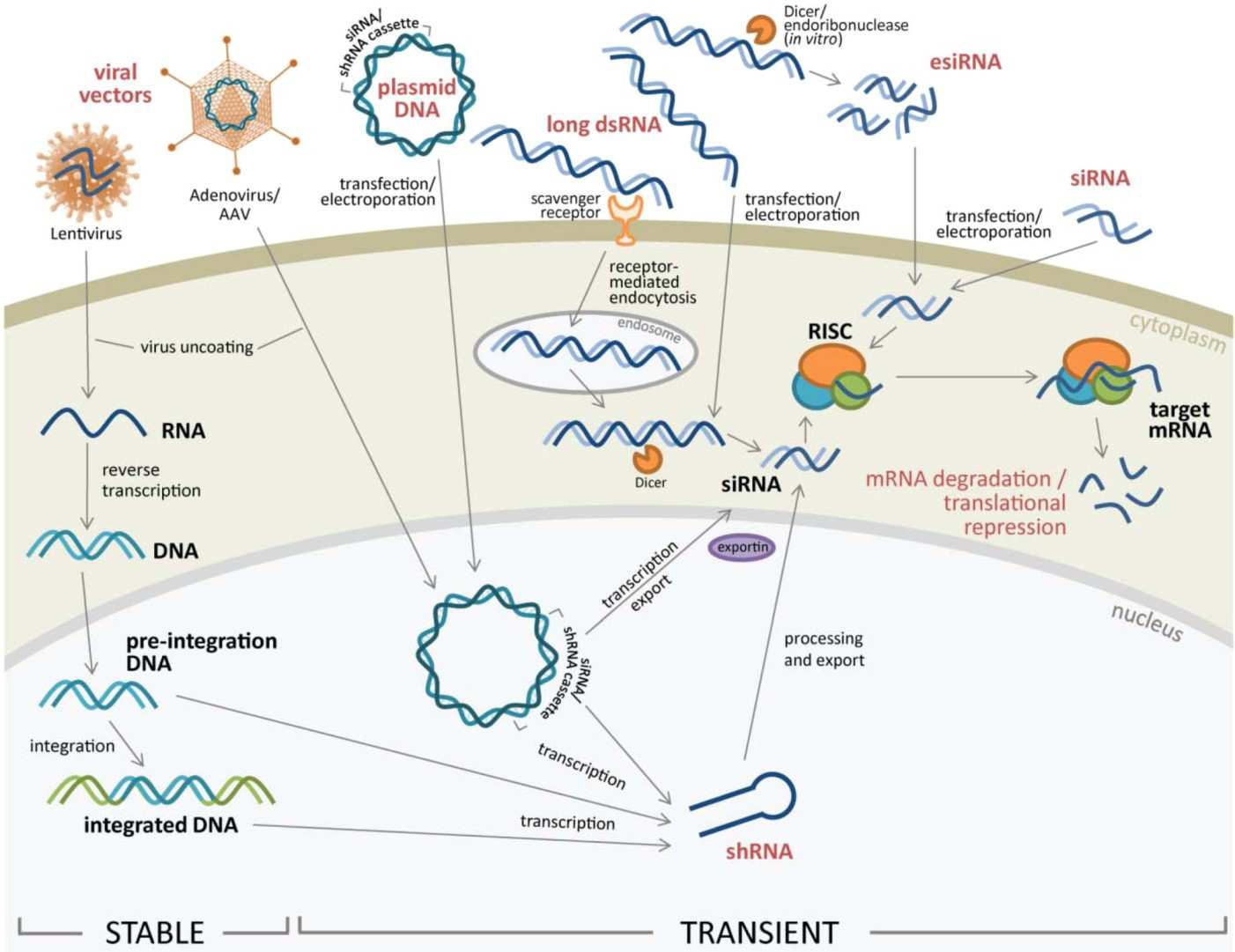 Fig 1. Types of RNAi constructs introduced into target cells for silencing.1
Modern RNAi screening employs genome-wide libraries (e.g., Dharmacon siGENOME, Sigma MISSION) covering >20,000 human genes, available in both arrayed (well-by-well) and pooled formats. High-throughput readouts, including cell viability assays, fluorescence-based reporters, and high-content imaging, enable large-scale phenotypic screening. By systematically perturbing gene expression, RNAi screening uncovers essential genes, synthetic lethal interactions, and pathway dependencies, making it indispensable for drug target discovery
RNAi Screening in Drug Target Discovery
RNAi screening has been instrumental in uncovering genetic vulnerabilities in diseases. A landmark study by Luo et al. (2009) used genome-wide RNAi screening in KRAS-mutant cancers to identify TBK1 and STK33 as synthetic lethal targets, providing a rationale for kinase inhibitor development.2 In virology, Brass et al. (2008) discovered CCR5 as a key HIV host factor through RNAi screening, leading to the FDA-approved drug maraviroc.3 These studies exemplify RNAi screening's power in bridging basic research to clinical translation.
Standard RNAi Screening Workflow
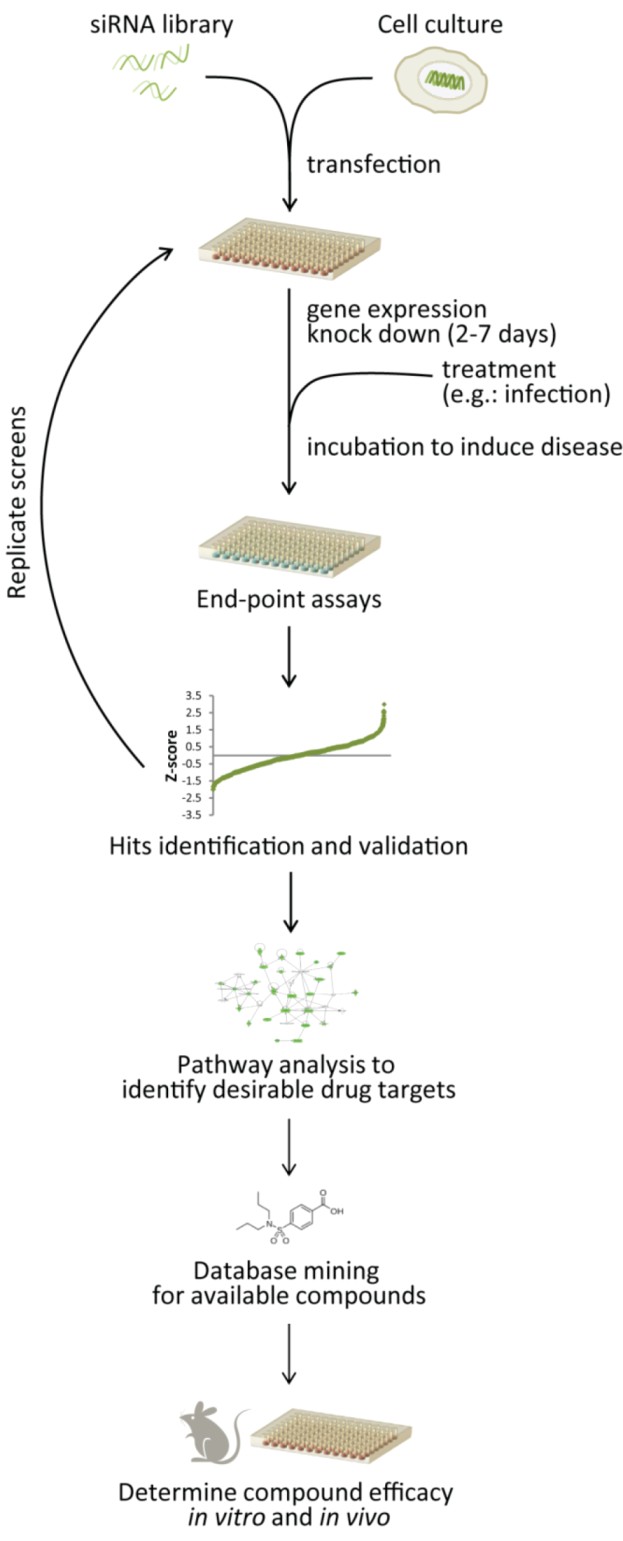
The process of using RNAi screening for target discovery involves four key phases:
(1) Experimental Design: Selection of disease-relevant models (cell lines, primary cells, or organoids) and phenotypic assays (e.g., proliferation, apoptosis, viral infection). Customized siRNA/shRNA libraries are designed based on research goals, ranging from focused pathway screens to genome-wide analyses.
(2) Phenotypic Screening: Cells are transfected with siRNA pools or transduced with shRNA libraries. Arrayed screens allow single-gene analysis in multi-well plates, while pooled screens use barcoded shRNAs for positive selection. High-throughput readouts (e.g., transcriptional reporters, cytokine production, protein phosphorylation, proliferation, apoptosis, or high content cell imaging) quantify phenotypic effects.
(3) Hit Identification & Validation: Primary hits are selected based on statistical significance (e.g., Z-score analysis) and validated using independent siRNAs or shRNAs. Orthogonal approaches, such as CRISPR knockout or small-molecule inhibitors, confirm target relevance.
(4) Mechanistic Follow-Up: Functional studies (e.g., Western blot, qPCR) verify target knockdown, while pathway analysis (e.g., Gene Ontology, KEGG) elucidates biological networks.
PharmaAnalytica's Technology Platform
Celetrix Electroporator
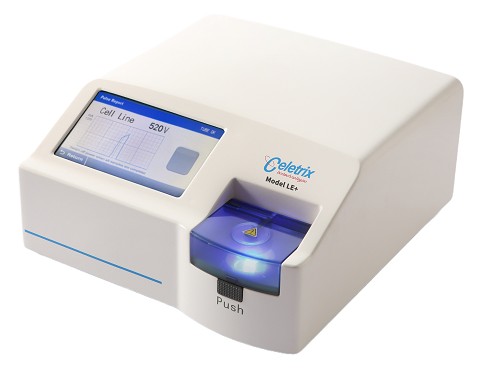
Celetrix Electroporator enable efficient siRNA delivery in RNAi screening by applying electrical pulses to transiently permeabilize cell membranes, facilitating rapid and uniform transfection of hard-to-transfect cell types.
BriCyte E6
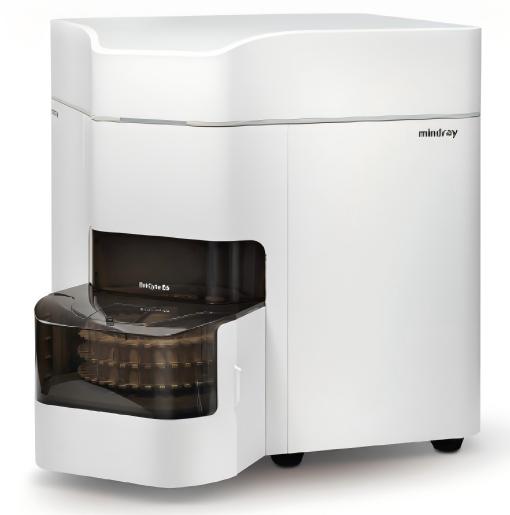
BriCyte E6 Flow cytometry enables high-throughput analysis of cellular phenotypes in RNAi screening, allowing quantitative detection of gene knockdown effects on target protein expression, cell viability, and signaling pathways to identify potential therapeutic targets.
PharmaAnalytica's CRISPR-Cas9 Screening Services
PharmaAnalytica offers industry-leading RNAi screening solutions with the following advantages:

Cutting-Edge Technology
Proprietary siMAX™ siRNA designs enhance on-target specificity and minimize off-target effects. Advanced delivery methods (e.g., lipid nanoparticles, lentiviral vectors) ensure efficient gene knockdown in diverse cell types, including primary and 3D culture models.

Comprehensive Screening Platforms
Customizable libraries (genome-wide, druggable genome, or disease-focused) coupled with high-content imaging (Operetta CLS, Incucyte) enable multiparametric phenotypic analysis.
Integrated Data Analysis
The HitSelect™ bioinformatics platform combines redundant siRNA analysis (RSA), gene set enrichment, and network pharmacology to prioritize clinically actionable targets.
Therapeutic Expertise
Proven success in oncology (synthetic lethality screens), infectious diseases (host-pathogen interactions), and neurodegeneration (disease modifier discovery). End-to-end support includes IND-enabling studies and biomarker development.
By leveraging RNAi screening's power, PharmaAnalytica accelerates the transition from target discovery to preclinical development, reducing attrition rates in drug pipelines.
References
- Perwitasari, O., et al. (2013). "siRNA genome screening approaches to therapeutic drug repositioning." Pharmaceuticals. 6(2): 124-160.
- Luo, J. , et al. (2009). "A genome-wide rnai screen identifies multiple synthetic lethal interactions with the ras oncogene."Cell. 137(5): 835-848.
- Brass, A. L. , et al. (2008). "Identification of host proteins required for hiv infection through a functional genomic screen." Science. 319(5865): 921-926.
Online Inquiry
This site is protected by reCAPTCHA and the Google Privacy Policy and Terms of Service apply.
Need More Information or Request A Quotation?
Related Links
