
Lipophilicity Determination with UV-Potentiometric Titration
Lipophilicity, a critical physicochemical property of lead compounds, is pivotal for evaluating their absorption, distribution, metabolism, and excretion (ADME) profiles, as well as their druggability potential. At STEMart's brand PharmaAnalytica, we leverage the UV-potentiometric titration method to deliver precise, efficient, and reliable lipophilicity testing services tailored for drug discovery and development. This advanced analytical approach integrates potentiometric detection with ultraviolet (UV) spectrophotometry, enabling comprehensive characterization of lead compounds' lipophilic behavior with exceptional accuracy and sensitivity.
UV-potentiometric titration is a hyphenated analytical technique that combines the strengths of potentiometric titration and UV spectrophotometry to determine key lipophilicity parameters (logP/logD) and acid-base dissociation constants (pKa) simultaneously. The method operates by titrating a lead compound solution with acid or base titrants under controlled temperature and ionic strength conditions. A potentiometric electrode monitors the potential changes of the solution in real time, capturing the protonation/deprotonation events of the compound's ionizable groups to derive pKa values. Concurrently, a UV detector measures the absorbance changes of the compound at its characteristic wavelength during titration, as the ionization state of the molecule directly alters its UV absorption properties. By correlating potentiometric potential data with UV absorbance signals, the technique accurately quantifies the distribution of the compound's neutral and ionized forms across different pH environments—eliminating the need for labor-intensive liquid-liquid extraction steps and enabling the direct calculation of core lipophilicity metrics. Through this integrated approach, PharmaAnalytica's UV-potentiometric titration service provides a comprehensive dataset of lipophilicity and related physicochemical parameters critical for lead optimization, with each key parameter delivering distinct, actionable insights for drug discovery:
- pKa Values (Acid Dissociation Constants): These values represent the acid-base dissociation constants of the lead compound's acidic or basic functional groups. They directly define the compound's ionization behavior at physiological pH levels (e.g., pH 7.4 in blood, pH 1.0 in the stomach), which is fundamental to understanding how the compound interacts with biological fluids and target proteins during in vivo processes.
- logP Values (Octanol-Water Partition Coefficient): logP quantifies the intrinsic lipophilicity of the lead compound in its neutral form, reflecting the compound's tendency to partition between hydrophobic (octanol) and hydrophilic (water) phases. This parameter is a key indicator of the compound's membrane permeability potential, as higher logP values typically correlate with enhanced ability to cross lipid bilayers.
- logD Values (Distribution Coefficient at Specific pH): Unlike logP (which only reflects the neutral form), logD represents the compound's effective lipophilicity at specific pH points—we provide logD data across a physiologically relevant range (pH 1.0–12.0). This is critical for predicting the compound's behavior in different biological compartments, as lipophilicity directly impacts absorption, distribution, metabolism, and excretion (ADME) profiles.
- pH-Lipophilicity Profiles: These profiles plot logD changes across a full pH range, offering a visual representation of how the compound's lipophilicity varies with environmental pH. This visualization enables researchers to quickly assess how the compound will perform in different physiological environments, supporting more informed decisions in lead optimization and preclinical development.
PharmaAnalytica's Technology Platform
NCE P3 Physicochemical Parameter Analyzer
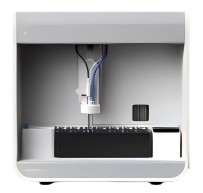
NCE P3 integrates UV spectrophotometry and potentiometric titration modules in a single platform. It is specifically designed for micro-volume lead compound analysis, requiring only 5 μL of 10 mM stock solution (≈10 μg of sample) per test—ideal for precious early-stage lead compounds. The instrument automates the entire titration process, delivering pKa, logP, and logD results in 20 minutes per sample, enabling high-throughput screening of lead libraries.
ZDJ-600D Automatic Potentiometric Titrator
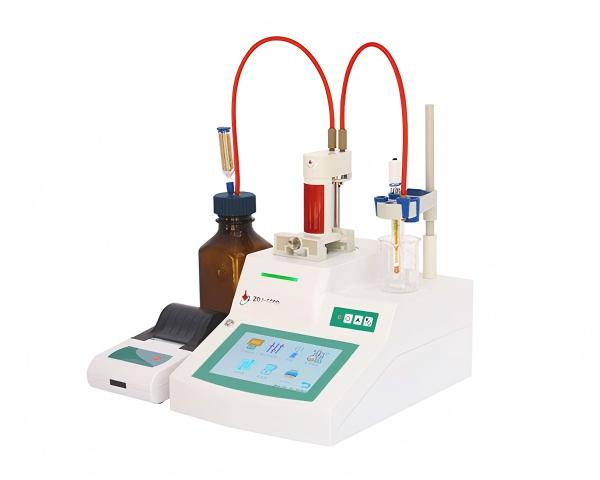
The ZDJ-600D serves as a robust backup and supplementary tool for pKa determination. It features a high-accuracy titration burette (minimum increment 0.01 mL) and multi-parameter monitoring (pH, potential, temperature), supporting dynamic and constant-pH titration modes. When paired with a UV detector, it enables accurate pKa measurement for lead compounds, providing reliable foundational data for logP/logD calculation and meeting GLP data traceability requirements.
PharmaAnalytica's Lipophilicity Determination Services
PharmaAnalytica's UV-potentiometric titration service delivers accurate, reliable, and GLP-compliant lipophilicity data. These advantages collectively accelerate lead compound optimization, support SAR analysis, and facilitate the progression of promising drug candidates toward preclinical development. For pharmaceutical researchers seeking efficient, high-quality, and cost-effective lipophilicity characterization for lead compounds, PharmaAnalytica's service is the optimal solution, bridging early-stage discovery and successful drug development with precise physicochemical insights.

High Sensitivity with Micro-Sample Requirement
With exceptional sensitivity, our service only needs 5 μL of 10 mM stock solution (≈10 μg/sample), preserving precious lead compounds for subsequent tests and ensuring accuracy even for low-concentration solutions.

Comprehensive and Actionable Data Output
We provide precise pKa, logP, logD (pH 1.0–12.0) and pH-lipophilicity profiles, processed via advanced algorithms (±0.02 log units precision) and compliant with GLP/GMP for lead optimization and SAR analysis.
Fast Turnaround for High-Throughput Screening
Our automated workflow enables high-throughput testing of hundreds of compounds daily, accelerating lead screening with reduced human error and reliable results.
Professional and Experienced R&D Team
Our team comprises seasoned analytical scientists with rich experience in lead compound physicochemical testing, proficient in UV-potentiometric titration and strict adherence to GLP/GMP guidelines for reliable results.
Online Inquiry
This site is protected by reCAPTCHA and the Google Privacy Policy and Terms of Service apply.
Need More Information or Request A Quotation?
Related Links
