
Differential Scanning Calorimetry (DSC)
Differential Scanning Calorimetry (DSC) is a powerful thermoanalytical technique that measures the heat flow difference between a sample and an inert reference as they undergo controlled temperature changes. This method detects thermal transitions such as melting, crystallization, glass transitions, and degradation, providing critical insights into material properties.
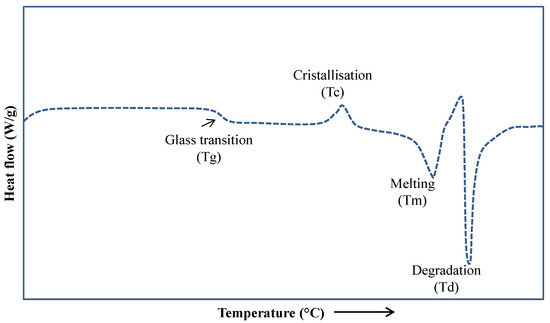 Fig 1. Schematic representation of thermal transitions in semicrystalline material obtained from differential scanning calorimetry (DSC) thermogram. 1
In drug-excipient compatibility studies, DSC data interpretation focuses on thermal profile alterations in drug-excipient mixtures compared to pure components. Key indicators of incompatibility include:
- Disappearance, broadening, or shift of the API's melting endotherm, suggesting interactions (e.g., formation of eutectic mixtures or amorphous dispersions).
- Appearance of new thermal events, indicating chemical reactions or polymorphic transformations.
- Changes in glass transition temperature (Tg), revealing physical interactions in amorphous systems.
By analyzing these deviations, DSC provides early-stage, material-saving screening of potential incompatibilities before lengthy stability studies.
Applications in Drug-Excipient Compatibility Studies
DSC plays a pivotal role in pharmaceutical formulation by identifying physical and chemical incompatibilities that could compromise drug stability or performance. It is particularly valuable for:
- Excipient Screening: Rapidly evaluating multiple excipients (e.g., binders, lubricants) with minimal API consumption.
- Solid Dispersion Development: Detecting drug-polymer miscibility through Tg analysis.
- Stability Risk Prediction: Flagging interactions that may lead to degradation (e.g., acid-base reactions with enteric coatings).
- Polymorph Control: Identifying excipient-induced phase transitions that alter bioavailability.
- Regulatory agencies (e.g., FDA, ICH) recommend DSC as part of preformulation studies to mitigate risks in later development stages.
DSC stands out as the gold standard for drug-excipient compatibility due to its speed, sensitivity, and versatility. DSC delivers results within hours using milligram quantities—critical for early-stage projects with limited API availability. The technique detects subtle interactions invisible to other methods; for example, a slight shift in melting onset may reveal excipient-mediated destabilization. DSC also accommodates diverse formulations, from lyophilized powders to hot-melt extrudates, and can simulate processing conditions (e.g., heating during tablet compression). When combined with modulated DSC (MDSC), it distinguishes between overlapping thermal events (e.g., melting vs. decomposition), reducing false positives. Moreover, DSC data is quantitative and reproducible, aligning with Good Manufacturing Practice (GMP) requirements for regulatory filings.
PharmaAnalytica's Technology Platform
DZ-DSC103 DSC
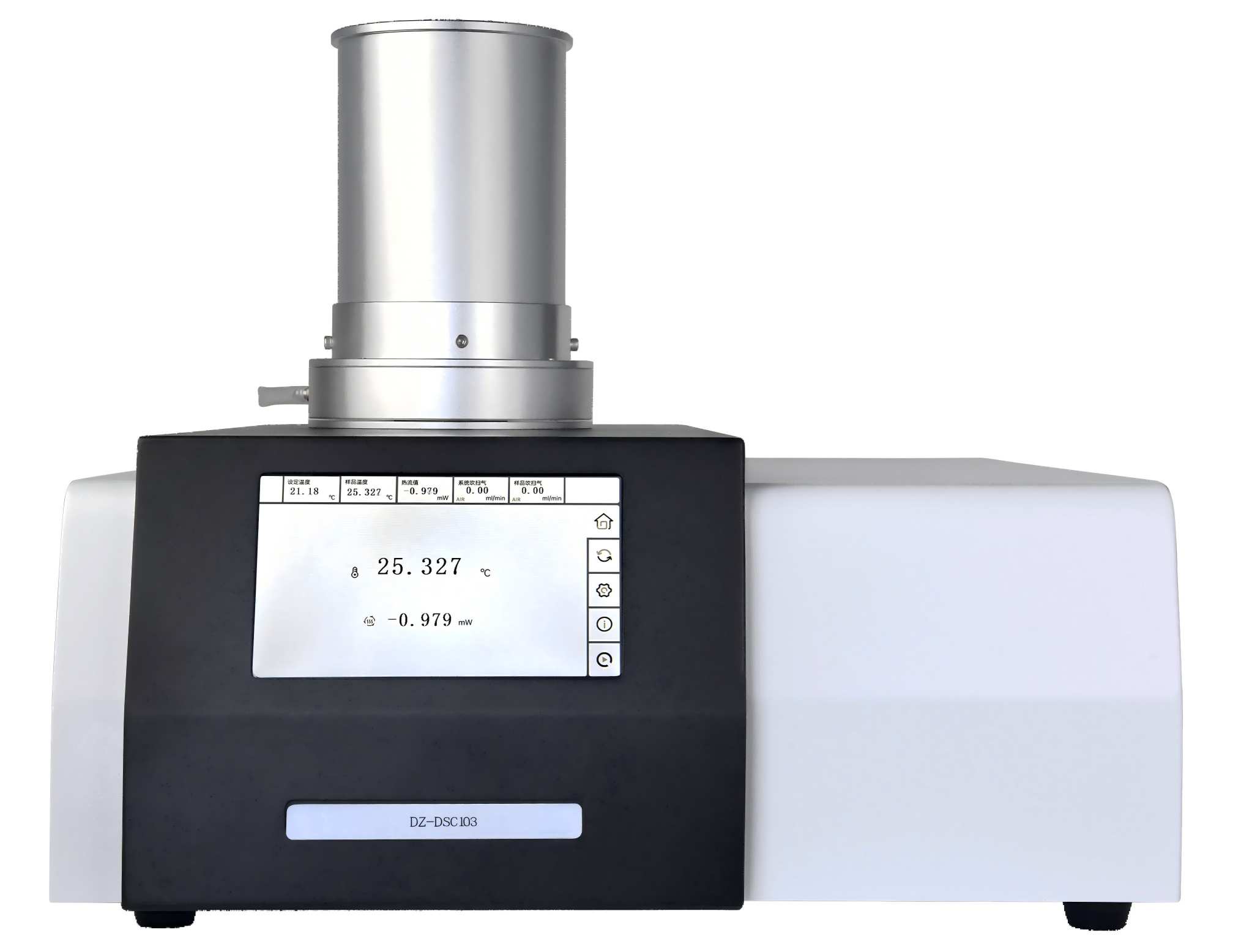
DZ-DSC103 High-Temperature Differential Scanning Calorimeter (DSC) features an extensive temperature range capable of heating up to 1500°C, enabling comprehensive thermal analysis including measurement of melting point, glass transition temperature (Tg), enthalpy (ΔH), curing temperature, product stability, oxidation induction period (OIT), degree of curing, gelatinization, crystallization behavior, and specific heat capacity (Cp).
DZ-DSC400C DSC
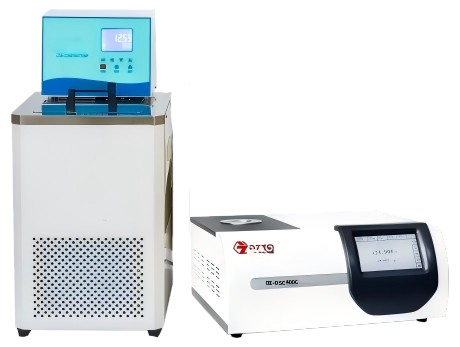
DZ-DSC400C is a low-temperature differential scanning calorimeter (DSC) that employs semiconductor refrigeration technology to achieve rapid cooling. It is designed to measure heat flow changes in materials during heating or cooling processes, enabling comprehensive thermal analysis including glass transition temperature (Tg), phase transition temperature, melting point, enthalpy (ΔH), curing temperature, product stability, and oxidation induction period (OIT) measurements.
PharmaAnalytica's DSC-Based Drug-Excipient Compatibility Studies
PharmaAnalytica's DSC services transform drug-excipient compatibility screening into a fast, data-driven decision-making process.

High-Throughput Screening
PharmaAnalytica utilizes automated DSC systems and machine learning algorithms to analyze large excipient libraries efficiently. Our software flags statistically significant thermal changes, reducing subjective interpretation.

Customized Study Designs
We tailor protocols to specific challenges, such as:
- Humidity-Controlled DSC:
- High-Pressure DSC
- Binary vs. Multi-Component Blends
Regulatory-Ready Data Packages
Our reports comply with ICH Q1A, Q6A, and USP <891>, including compatibility risk ratings (low/medium/high) based on thermal deviations.
End-to-End Expert Support
PharmaAnalytica's team of PhD-level scientists provides pre-study consultations to optimize experimental design, post-data troubleshooting and formulation recommendations for incompatible pairs.
By combining cutting-edge instrumentation, regulatory expertise, and customized support, we help clients avoid costly formulation failures and accelerate robust drug product development.
Reference
- Saavedra-Leos, M., et al. (2014). "Physical properties of inulin and inulin–orange juice: Physical characterization and technological application." Carbohydr. Polym. 105, 10–19.
Online Inquiry
This site is protected by reCAPTCHA and the Google Privacy Policy and Terms of Service apply.
Need More Information or Request A Quotation?
Related Links
